How to Manifest Your Wedding Food
Your wedding food isn't just catering logistics — the feast reflects what you assume about abundance and deserving. This guide walks the Law of Assumption method for the menu you want, the caterer who delivers, and a table of true abundance, all within budget.

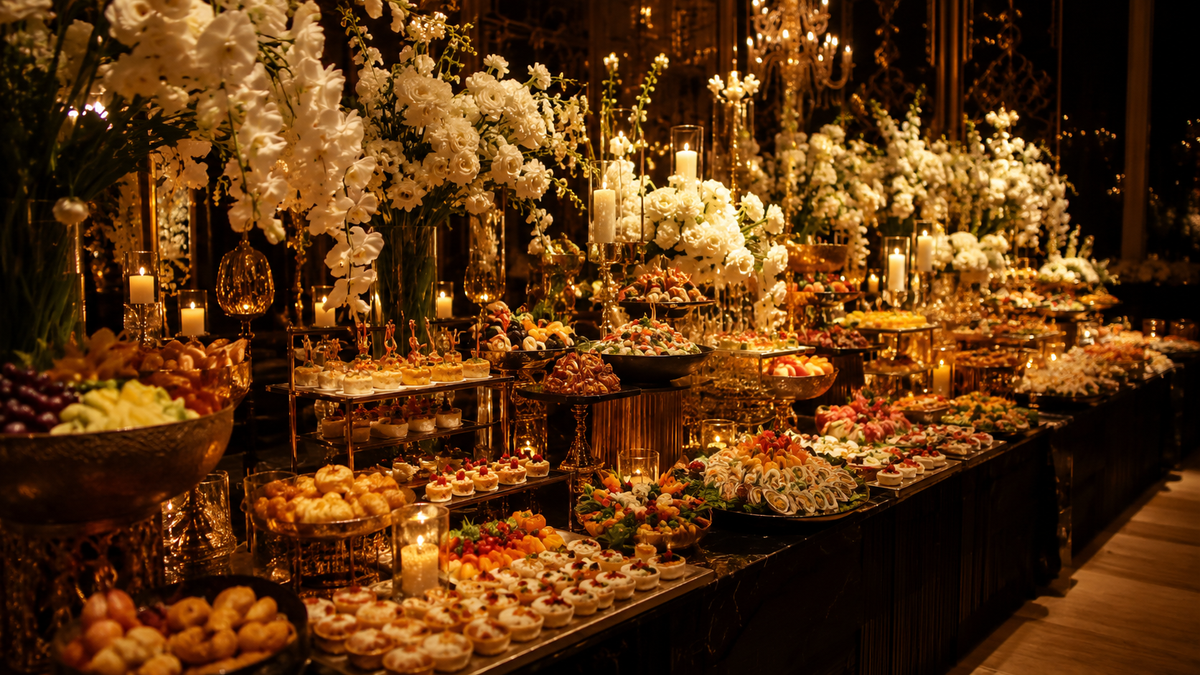
You manifest your wedding food by assuming the inner state of abundance and deserving — the feast reflects what you believe you're worthy of, not just what you can arrange. In the Law of Assumption, the outer world out-pictures your inner state, so the menu, the caterer, and the ease of it all mirror your self-concept around abundance.
Define the feeling of the table, assume the host whose guests are lavishly fed and delighted, live from the end as you taste-test and book, revise any "we can't afford good food" or "something will go wrong" story, and persist in SATS picturing the full, beautiful table. Because everyone is you pushed out, the caterer and the service fall into place.
Get the full method in The Law of Assumption.

The feast reflects what you assume you deserve
Abundance at the table is the out-picturing of an inner state, not just a budget line. The Law of Assumption is the complete method for assuming it.
Read The Law of AssumptionAsk any couple where the wedding budget gets bloody, and they'll point at the food. The per-head catering quote, the open bar, the cake that costs more than the dress — food is where "we can't afford it" gets said out loud most often, and where the dream quietly shrinks to fit the fear. Here's the shift that changes it: your wedding feast is not set by the budget alone. It is a reflection of what you assume you deserve, and that is exactly what the Law of Assumption lets you change. This is one piece of the celebration; return any time to the pillar, how to manifest your dream wedding, for the whole day.
Part of the clusterNeville Goddard taught that the outer world is a faithful reflection of your inner state. The feast is no exception. Its quality, its abundance, the caterer who delivers it, and the ease of affording it all express your self-concept around abundance and deserving. Work on that, and the table follows.
Wedding food manifestation: bringing about the menu, the caterer, and the abundance of the feast through the Law of Assumption — by assuming the self-concept of someone who deserves a lavish table, rather than only by budgeting.
Abundance: the inner assumption that there is enough and more than enough, which the feast and its affordability reflect.
Everyone is you pushed out (EIYPO): Neville's principle that the people in your reality, including the caterer and kitchen, express your assumptions.
Why the feast reflects your assumption of abundance
Food is the most ancient symbol of abundance there is — a full table has meant "we have enough, we are safe, we are blessed" for as long as there have been tables. That's why it carries so much charge at a wedding, and why it makes such a clean mirror. Two couples with the same budget will have completely different food experiences depending on a single inner variable: whether they assume there's enough. The couple braced for scarcity finds every quote too high and every option a compromise. The couple assuming abundance finds the caterer within reach, the unexpected upgrade, the table that overflows.
This means you don't manifest the feast by cutting corners more cleverly — you manifest it by becoming the host who assumes abundance as normal. The budget is real, but your experience of what it can buy is shaped by the state you bring to it. Change the assumption of deserving, and the abundance arranges itself.
— The Core Principle —
You do not set the table from your fear of scarcity. You assume the abundance you deserve, and the feast arranges itself to match.
The Law of Assumption, applied to the feastThe five steps to manifest your wedding food
1. Define the feeling of the table
Before the menu tasting, decide the feeling: a table of true abundance, guests delighted and well-fed, nothing scrimped, a meal people remember. That felt quality is the assumption you're planting. A menu chosen from anxiety about cost produces a thin, anxious feast no matter the price.
2. Assume the host who feeds them well
Step into the inner state of the host whose guests are already lavishly fed and glowing — the one for whom a generous, beautiful table is simply normal. You're not hoping for it; you're occupying it as a settled fact. That assumption is what the catering search will reflect.
3. Live from the end while booking
As you taste-test, compare quotes, and book, choose from abundance rather than scarcity — as the host whose feast is already handled and overflowing. Living from the end means booking the caterer as the person whose table is already abundant, not the one anxiously trimming to make it fit.
Abundance, self-concept, revision, and SATS — the full system behind every step here.
Read The Law of Assumption4. Revise the lack stories
The moment "we can't afford good food," "something will go wrong with the catering," or "it won't be enough" surfaces, revise it. Replay the reception in imagination with the food abundant and perfect, the guests raving, every plate full — and feel that as real. Unrevised, the lack story keeps shaping the search. This is Neville's revision technique applied to abundance.
5. Persist in the State Akin to Sleep
Each night, in the drowsy state before sleep, occupy a short scene of the reception: the full table, the first bite, a guest telling you it's the best wedding food they've ever had. Persist there until it feels ordinary. Persistence means holding the abundant feast until it feels normal, not affirming abundance while still bracing for the bill. The drowsy threshold is where SATS installs the assumption deepest.
Manifesting the feast within budget
The fear that good food is out of reach is itself an assumption — and the most common one around the menu. In the Law of Assumption, your experience of what the budget can buy reflects your self-concept around abundance, not a fixed ceiling. Couples routinely land the caterer they assumed was too expensive at an off-peak rate, get a free course upgrade, win a tasting package, or find a hidden gem that outshines the big names for less. Manifesting the feast in budget means assuming abundance and ease around the food, not shrinking the dream to fit the fear. Hold the abundant table and the ease together, and let the bridge of incidents arrange the how.
The caterer, the kitchen, and "everyone is you pushed out"
The caterer who nails the tasting, the kitchen that times every plate perfectly, the staff whose service is warm and seamless — in the Law of Assumption, all of them are you pushed out. They perform according to your assumptions about abundance and about being well taken care of, not as independent risks to manage. Assume a caterer who gets it, a flawless service, and a kitchen that delivers, and revise the feared disaster whenever it appears. The full mechanics are in everyone is you pushed out.
Manifest the rest of the day
The food is one thread in the whole celebration. Each part has its own assumptions and its own guide.
Common misconceptions about manifesting wedding food
Misconception: manifesting means ignoring the budget. You still budget and book. You simply do it from an assumption of abundance, so the budget stretches further and the ease shows up, rather than from scarcity that confirms the lack.
Misconception: a tighter budget means worse food is inevitable. Price is a reflection, not a verdict. Assuming abundance is what surfaces the off-peak rate, the upgrade, or the hidden-gem caterer who outshines the budget.
Misconception: a catering hiccup means it failed. A wobble is often the bridge of incidents rearranging the path to a better outcome. The fulfilled host stays in state and revises rather than spiraling.
Misconception: you must plan every dish to manifest it. You hold the feeling of the abundant, delightful table. The specific menu organizes around that state without you scripting every plate.
Where this fits in the Law of Assumption
At The Universe Unveiled, the wedding feast is read as a mirror of how deserving and abundant you assume yourself to be — set not by the budget alone but by the self-concept you bring to the table. The canon applies: living from the end sets the state, revision clears the scarcity stories, SATS installs the assumption of abundance, and everyone is you pushed out explains the caterer and the service. It all sits under the pillar, how to manifest your dream wedding, and the complete doctrine is in the Neville Goddard ultimate guide.
— The Universe Unveiled Reading —
You are not trimming a dream to fit a fear of scarcity. You are becoming the host who assumes abundance as normal — and watching the feast, the caterer, and the overflowing table arrive to meet her.
Glossary: key terms
Abundance: the inner assumption that there is enough and more; the cause the feast reflects.
Self-concept: what you assume you deserve, which sets your experience of what the budget can buy.
Living from the end: booking the caterer and menu as the host whose table is already abundant.
Revision: mentally rewriting a scarcity or catering-disaster fear so it resolves abundant and perfect.
EIYPO: everyone is you pushed out — the caterer and service reflect your assumptions.
SATS: the State Akin to Sleep, where the assumption of abundance installs most deeply.
Bridge of incidents: the natural chain of events that delivers the feast, often at an unexpected value.
The feast arrives for the host who assumes she deserves it
You have the method. The Law of Assumption gives you the complete system — abundance, self-concept, revision, and SATS — so the menu, the caterer, and the overflowing table arrive to meet the host you've become.
Read The Law of Assumption